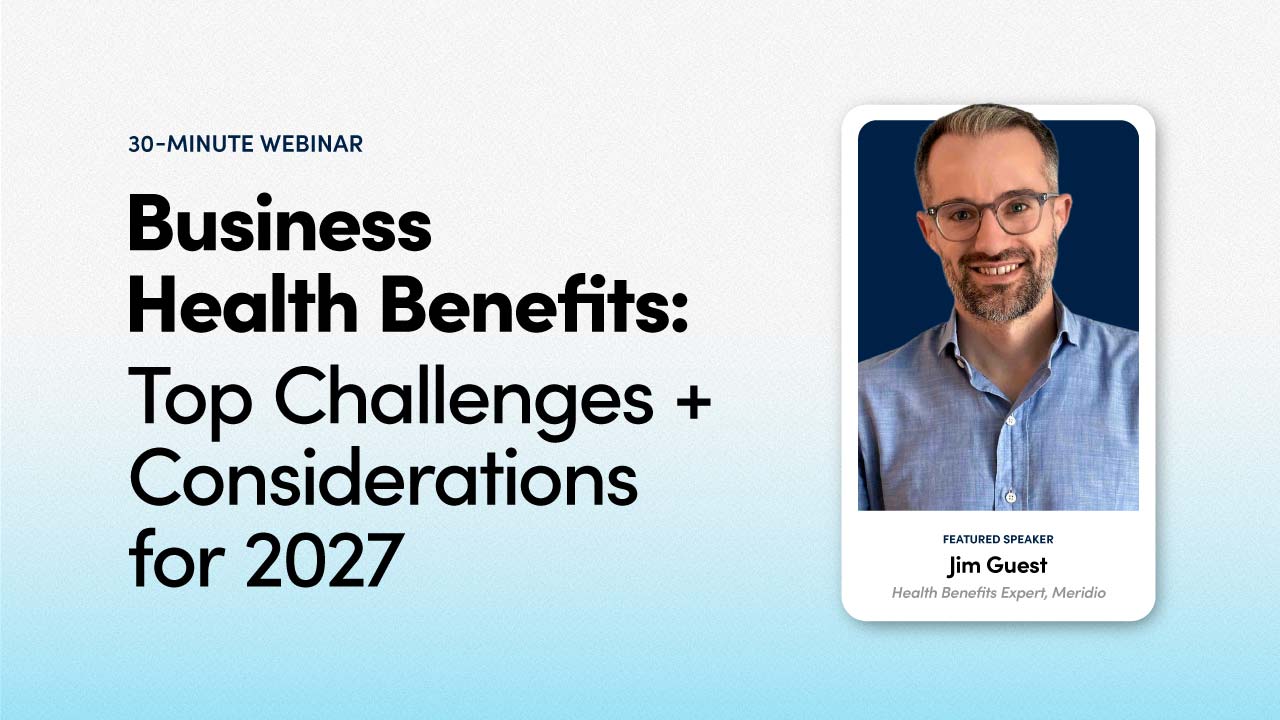
2027 Open Enrollment: Top Considerations for Businesses When Choosing Health Benefits

Open enrollment season has a way of sneaking up on everyone, but especially those managing benefits for small and fast-growing businesses. One week it's a line item on next quarter's calendar, and the next it's a deadline with your name on it.
Whether you’re facing a more expensive renewal or considering offering coverage for the first time, understanding what matters can help you evaluate your options rather than accepting whatever lands in your inbox or skipping the decision altogether because it feels too complicated.
Based on years of experience of helping businesses nationwide, here are four important considerations to keep in mind as you evaluate health benefit options for 2027:
1. Know your workforce
Before choosing a health insurance plan, take a close look at who you employ and what your team is looking for. Consider current plan participation, questions from employees, and the types of coverage they may need. A younger, healthier workforce may have different priorities than a team with more dependents or ongoing healthcare needs. Understanding those differences can help you choose employee benefits that fit your workforce and avoid low enrollment or frustration down the road.
It’s also important to understand where your workforce stands from a compliance standpoint. If you’re renewing coverage or offering health insurance for the first time and have 50 or more full-time or full-time-equivalent employees, you may be considered an Applicable Large Employer (ALE). ALEs have additional requirements to consider, so knowing your status early can help you plan ahead.
2. Understand what you're choosing between
It’s not uncommon to default to whatever plan type you landed on years ago, mainly because no one ever walked you through the alternatives, including:
- Direct-to-consumer plans: ACA-compliant coverage purchased directly by individuals, which may offer lower costs without a traditional employer-sponsored plan structure.
- Self-funded plans: The organization pays employee claims directly, typically with stop-loss insurance to help protect against high-cost claims.
- Level-funded plans: A hybrid approach that combines predictable monthly payments with the potential to receive a surplus if claims come in lower than expected.
- Association health plans: Coverage offered through an association that can allow smaller organizations to access benefits structured more like large-group coverage.
These aren't interchangeable, and determining the right strategy depends on your workforce, goals and budget.
3. Dig a little deeper and weigh the trade-offs, not just the price
Every plan comes with trade-offs, and the goal shouldn’t be to find the cheapest or the most familiar option, it's to find the one that actually fits your specific business and workforce needs. A lower quote might come with a narrower network, higher out-of-pocket costs, or less flexibility for seasonal or fluctuating staffing, trade-offs that are worth making for some teams and not worth it for others.
On the flip side, a significant renewal increase doesn’t necessarily mean you’re getting better coverage. Sometimes, it simply means paying more for the same plan design. Before you sign anything, compare the plan’s coverage, provider network, actuarial value, flexibility, and cost-sharing requirements against your workforce’s actual needs. This can help you understand what you’re getting for the price and avoid unnecessary costs to your bottom line.
4. Choose a partner, not just a plan
The provider behind your health benefits matters just as much as the plan itself. Transparent pricing, flexible terms, and responsive support can make the difference between benefits that run smoothly and benefits that become a year-round headache.
Look for a partner that provides ongoing enrollment support, helps you understand your full-time-equivalent employee count, and is there when questions come up throughout the year, not just during open enrollment. The right support can make managing your benefits easier today and give you more flexibility as your team grows.
Open enrollment is the moment to act, not the deadline to dread.
You don’t need to become a benefits expert overnight. You just need to start early enough to understand your options, compare your choices, and identify the key considerations before making a decision. Shopping for health benefits doesn’t have to be overwhelming, but waiting until the deadline can limit your options and leave you making decisions under pressure.
Once the decision is made, make the most of your health benefits.
Choosing the right health benefits is an important first step, but it’s only part of the equation. Your team also needs to understand how to use their coverage and where to turn when they need care. Proactive education throughout the year can help employees get more value from their benefits than a benefits packet handed out once during open enrollment.
Encourage preventive care and routine screenings to help your team stay on top of their health and address potential issues early. Make sure employees also know about options like virtual care for non-urgent needs that may not require an emergency room visit. The work doesn’t stop once you choose a plan. Helping your team understand and use their coverage is what turns a benefits strategy into a benefit they can actually use.
Ready to Explore Your Options?
If you are a business owner with a small or fast-growing team looking for a simpler, more supportive way to offer health benefits, it may be time to see if Meridio is the right fit. Schedule a conversation with our team to learn more.

Latest Posts

Survey Results: Top Challenges of Offering Health Benefits in Today’s Market